
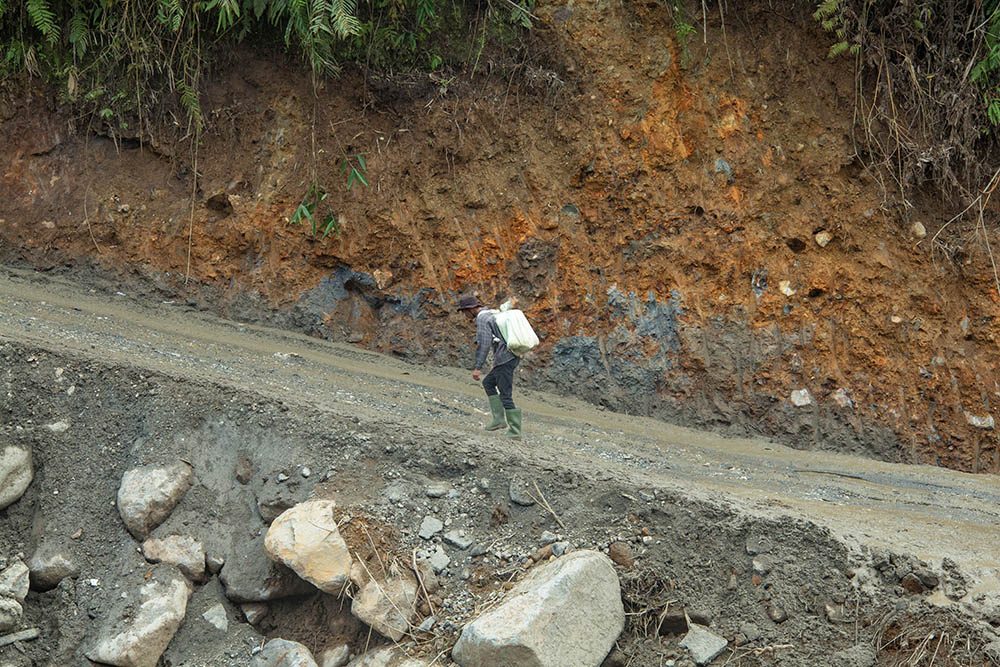

KabarPewarta.com, Aceh. January 9, 2026. High intensity rainfall that has swept across the highland region of Bener Meriah over the past several days has triggered landslides at multiple locations. Soil and rock debris have covered road sections stretching hundreds of meters. In several areas, the road surface has collapsed to depths of more than one meter, completely cutting off inter-regional access. The most severe conditions have been reported along the village route leading to Kampung Kem.
At several points, the road has sunk by more than one meter, making it impossible for vehicles to pass. A roadway that was previously about four meters wide has now narrowed significantly and can only be used by pedestrians.
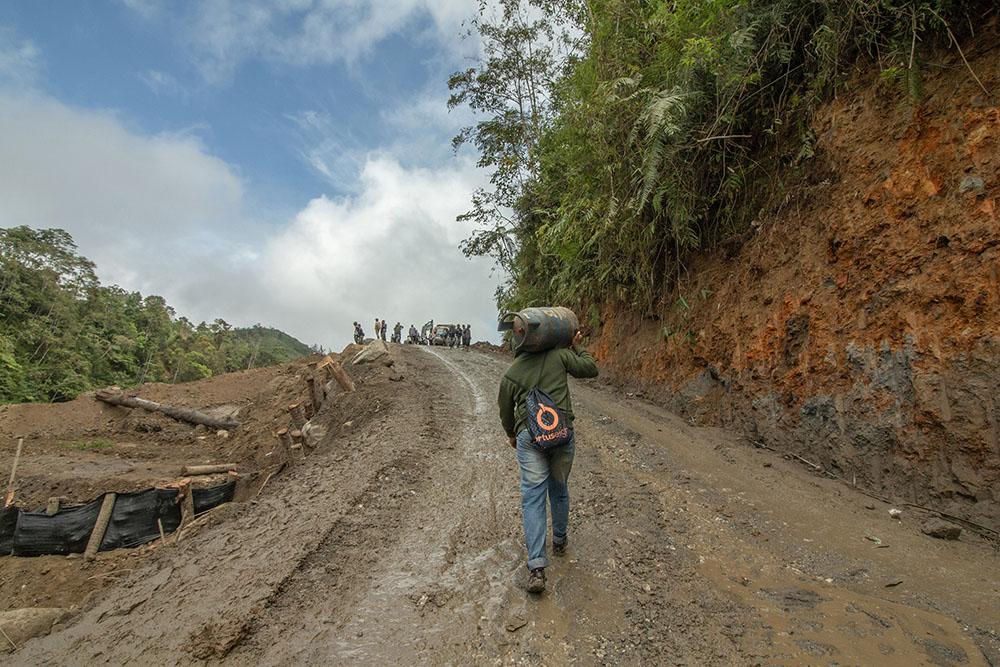
As a result, residents of Bener Meriah Village are forced to carry basic necessities such as rice, cooking oil, sugar, and other food supplies on their shoulders. These goods are transported manually along muddy paths accessible only to pedestrians. Each resident carries loads weighing between 20 and 30 kilograms while navigating the severely damaged terrain. This activity takes place daily as residents struggle to meet their household needs amid disrupted access.
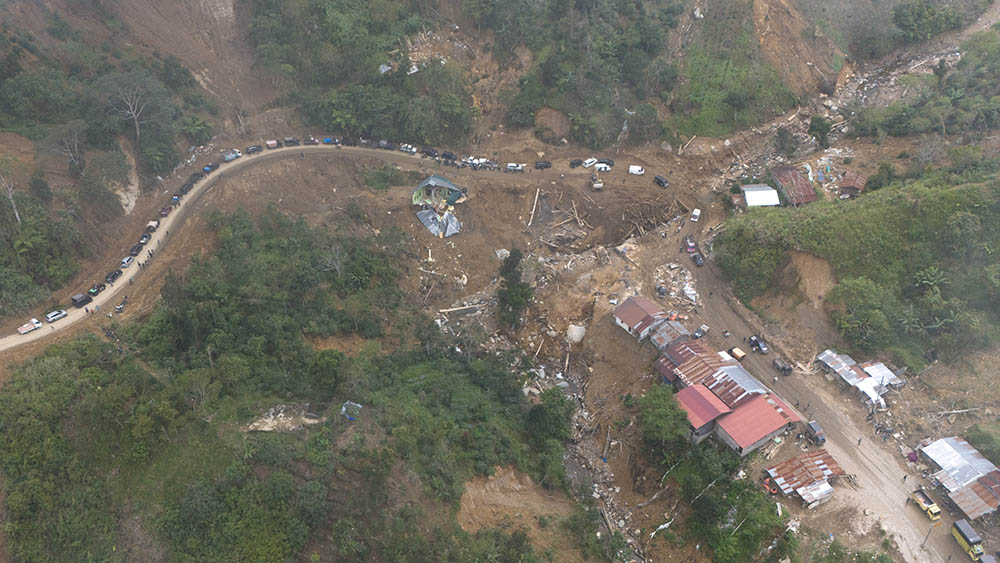
Meanwhile, similar conditions are also occurring in the Kampung Kem area. The main road serving as the primary access in and out of the village has reportedly been cut off due to landslides at several points. Mud measuring between 30 and 50 centimeters thick covers the road surface, causing motorcycles to skid and four-wheeled vehicles to become stuck. Long queues of vehicles have formed as traffic is unable to continue, either toward the sub-district center or out of the village.
Traffic congestion in Kampung Kem involves not only private vehicles but also trucks transporting basic necessities and agricultural products. Several trucks and open-bed vehicles have been seen stranded for hours because the route is impassable. Drivers are forced to turn off their engines and wait for conditions to improve, while some residents choose to carry their daily necessities on foot from Kampung Kem to their homes, covering distances of 20 to 30 kilometers.
The disruption of road access has had a direct impact on the local economy. Bener Meriah is widely known as a producer of coffee, vegetables, and other plantation commodities. However, with roads cut off and transportation halted, the distribution of agricultural products has been severely affected. Many farmers have been forced to delay shipments due to concerns that their harvests may be damaged.
Safety risks have also become a serious concern. The soil structure around the landslide sites remains unstable and poses a high risk of further landslides, especially during rainfall. Some residents have chosen not to travel at night due to the absence of street lighting in landslide-prone areas and limited security conditions.
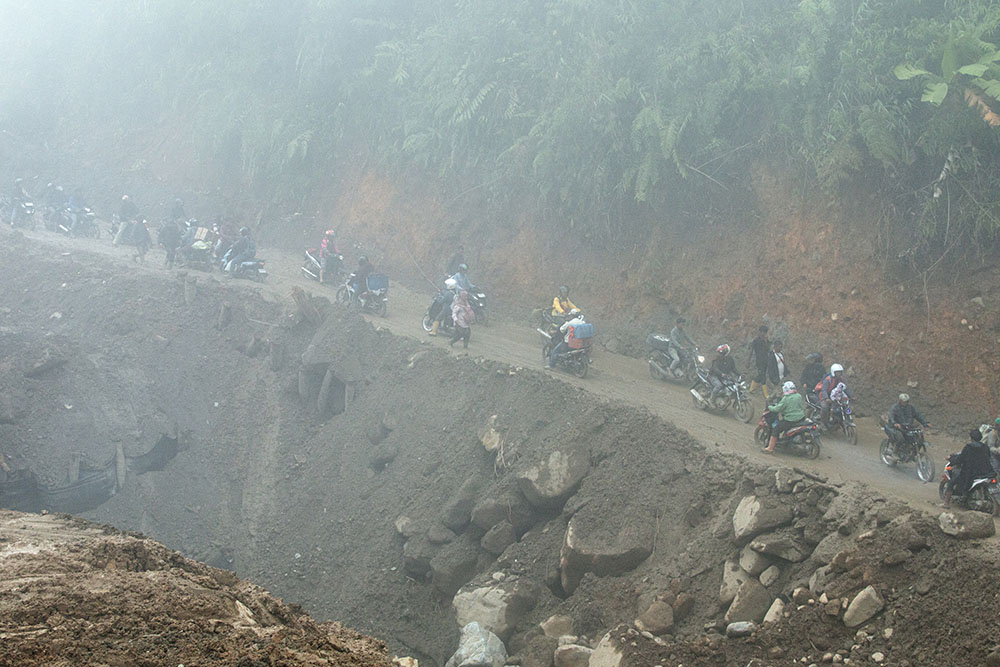
Local authorities, along with security personnel and volunteers, have taken steps to secure the affected areas. Warning signs have been installed at road break points and landslide-prone zones, particularly along the route to Kampung Kem. Efforts to clear landslide debris are being carried out manually while awaiting the arrival of heavy equipment. However, limited access and unstable weather conditions remain major challenges.
The regional government has conducted assessments of the road damage and its impacts. The routes connecting Bener Meriah Village and Kampung Kem have been classified as emergency priorities, as they serve as the main access for hundreds of households. Planned response measures include the complete removal of landslide material, road surface repairs, and slope reinforcement to prevent further landslides.
Until repairs are completed, residents are urged to remain vigilant and prioritize safety. This situation highlights the vulnerability of mountainous regions to natural disasters and underscores the importance of rapid response to ensure that social and economic activities can return to normal. Kabar Pewarta/CMTH